
Integrated and panel-ready refrigeration can require different engineering considerations from freestanding appliances, particularly when the design calls for flush installation or reduced cabinet clearances. When procurement teams benchmark the top 10 refrigerator brands, a growing share of premium sourcing activity targets these high-margin, zero-clearance architectures. Effectively sourcing these specialized systems requires a manufacturing partner capable of adapting thermal management, cabinet structure, and door mechanisms for enclosed operational environments.
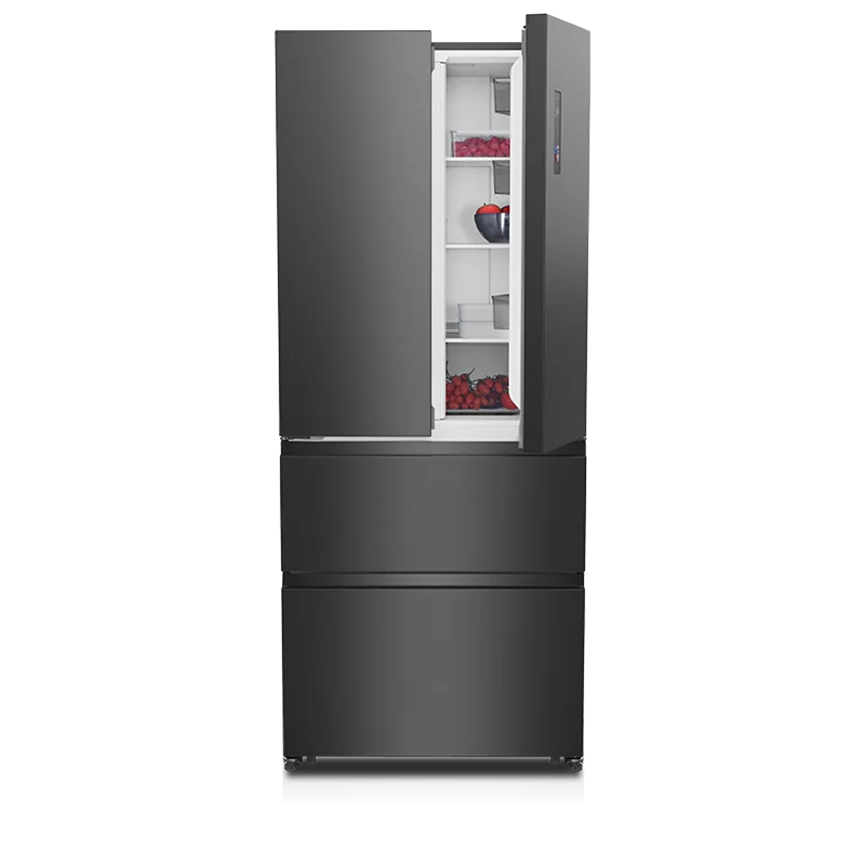
Front-Breathing Thermal Management Systems
The most critical engineering difference between freestanding and built-in refrigeration is how heat is dissipated. Freestanding refrigerators use different condenser and heat-dissipation configurations, including rear, side, or chassis-integrated designs. When a refrigerator is installed flush with cabinetry, its heat-dissipation path must be designed to maintain adequate airflow and prevent excessive operating temperatures.
Procurement contracts for integrated platforms must specify front-breathing thermal architectures. In these configurations, factory engineers move the condenser coil, compressor, and heat-exchanging fans to the base of the appliance. A motorized impeller actively draws cool ambient air through a specialized front grille, channels it over the condenser, and exhausts warm air back out at floor level. Sourcing hardware with these forced-air base units protects the core thermodynamic engine from thermal fatigue and keeps operational lifespan viable within tight structural enclosures.
Zero-Clearance Kinematics and Multi-Pivot Articulation
Traditional refrigerator doors swing outward on a fixed pivot point, needing lateral clearance to open fully without hitting adjacent countertops or walls. Integrated, panel-ready units require complex zero-clearance kinematics. When a refrigerator door carries a heavy custom panel, the hinge system should be specified according to the panel weight, door geometry, and required load rating.
Wholesale buyers should evaluate the hinge and door-opening mechanism against the required clearance, panel weight, and installation configuration. These specialized mechanical components let the door pull outward slightly before swinging open, keeping the thick custom panel flush with surrounding cabinetry during operation. B2B procurement teams often require extensive cycle-testing data during the Request for Quotation (RFQ) phase to verify that these heavy-duty hinges can withstand years of use under the added weight of dense hardwood facades without compromising the integrity of the magnetic door seal.
Acoustic Resonance and Enclosed Vibration Dampening
While acoustic engineering is important for all domestic appliances, it becomes a critical performance metric for built-in models. Enclosing a motorized compressor and active cooling fans inside a hollow wooden cabinet inherently amplifies mechanical vibration, creating an undesirable resonance chamber in the kitchen.
To offset this environmental issue, established manufacturing hubs use advanced Noise, Vibration, and Harshness (NVH) mitigation techniques. This involves specifying variable-capacity inverter compressors that run continuously at lower, quieter RPMs rather than cycling on and off frequently. In addition, factories integrate heavy-duty rubber isolator mounts under the compressor baseplate and apply acoustic dampening mastic to the internal steel chassis. By sourcing platforms specifically tuned for enclosed acoustic environments, overseas brand buyers avoid aftermarket complaints from premium consumers who expect near-silent operation in their living spaces.
Dimensional Metrology and Standardized Tolerances
The visual integration of an appliance depends heavily on dimensional conformity and consistent panel alignment. Built-in units have to fit into standardized structural cutouts—such as the common 60-centimeter width in European modular kitchens or the standard 24-inch depth common in North American cabinetry. Small dimensional deviations can affect appliance alignment and may become visible when tight installation tolerances are required.
Wholesale buyers gain access to sophisticated dimensional metrology by partnering with an established manufacturer of Homa Appliances’ standing. High-capacity Original Design Manufacturers (ODMs) use 3D laser scanning and automated chassis-squaring presses on the assembly line to enforce strict structural tolerances. This rigorous dimensional control provides the consistency needed for bulk institutional deployments, letting commercial real estate developers and custom cabinet makers build millwork based on exact, reliable factory specifications.
Beyond the primary chassis dimensions, successfully deploying an integrated appliance depends heavily on the supporting installation hardware. Procurement specifications should define the required leveling mechanism and anti-tip hardware according to the appliance design and installation requirements. Because built-in units are often placed on unfinished subfloors before final kitchen flooring is laid, these micro-adjustment mechanisms are critical for achieving a plumb installation.
If a unit leans slightly, the custom wooden panel will rub against adjacent millwork. In addition, specifying factory-supplied alignment templates reduces the labor burden on regional installation teams, directly lowering the total deployment cost for commercial real estate projects.
Moving an appliance portfolio into the high-end integrated market requires a deep understanding of specialized mechanical and thermal constraints. By prioritizing ODMs equipped to handle front-breathing heat dissipation, high-load kinematics, and strict dimensional tolerances, procurement directors can confidently source panel-ready hardware.
This technical focus lets wholesale brands compete in the premium housing and custom design sectors, delivering reliable, sophisticated cooling solutions that fit modern architectural environments.
 SEO