
Why Lines Stall When Loads Don’t Move
Factories rarely fail from design; they stall from flow. A lifting robot can stand three meters away while a picker waits, and the whole shift slips by minutes at a time. Across many audits, 20–30% of cycle time vanishes in material moves, handoffs, and small stops (annoying, but real). With heavy lifting robots, those gaps can compress fast—but only if the system fits the floor, not the other way around. So the question is simple: what blocks the move, and who pays for the delay?

Picture a late shift, mixed pallets, narrow aisles, one docking bay. The plan looked fine at 9 a.m., yet buffers overflow at 2 p.m., and your takt breaks. Loads queue. Routes clash. People adapt in silence. Why? Because small frictions add up when payloads get big. The data says “lost minutes,” but the floor says “stuck energy.” Are we fixing the right thing—or just adding more wheels? Let’s map the real constraints and compare what actually changes outcomes.
Under the Hood: What Traditional Fixes Miss
Where do costs hide?
Classic fixes scale by size, not by sense. Bigger forklifts. Wider aisles. More manual checks. But heavy moves do not fail from muscle alone. They fail when the plan hits edge cases: mixed center-of-gravity, flexing pallets, and blind corners. Old flows assume smooth paths. Real floors have occlusion and noise. LiDAR can clip on shrink wrap. SLAM can drift near metal racks. Force-torque sensors go unused, so robots see mass but not behavior—funny how that works, right?
Technical friction makes it worse. Power converters can sag under surge when a lift starts cold. PLC handshakes add seconds at every cell. Without edge computing nodes, the fleet waits on a central brain for micro-decisions. That creates queues at choke points. Look, it’s simpler than you think: the flaw is latency—human, digital, and mechanical. If a system cannot feel load variance, plan micro-routes on-device, and share intent with nearby units, it will always “arrive late,” even when it is on time. That is why heavy lifting robots perform best when sensing, planning, and power control live near the lift, not just in the cloud.
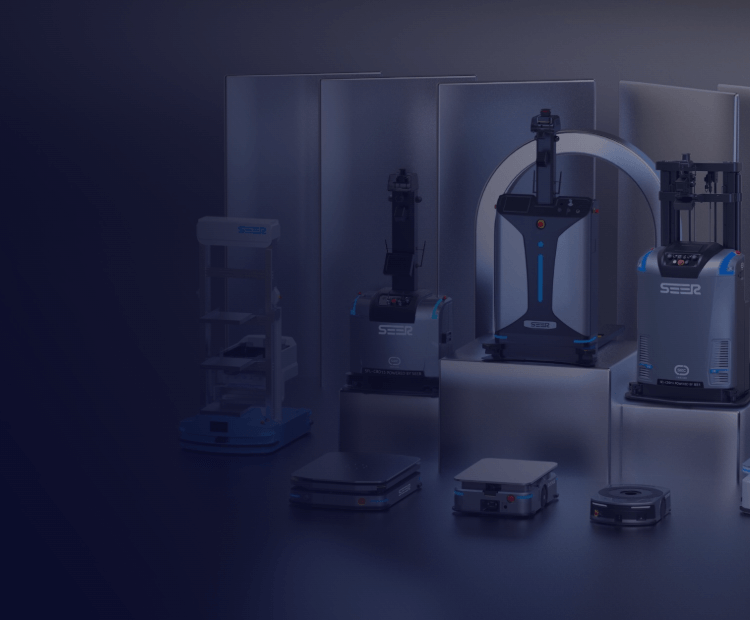
Next-Gen Edge: Principles and Practical Paths
What’s Next
The near future is comparative, not absolute. Two robots can lift 1,200 kg, yet only one clears a congested aisle without a pause. Why? New principles. Localized planning on edge computing nodes lets units adjust speed, fork height, and turning radius in milliseconds. Force-torque sensors read pallet flex and shift the lift profile. Power converters with regenerative braking keep voltage stable under surge (and feed energy back). The result is smooth motion, not stop-start. It feels simple on the floor—because the complexity moved inside the machine.
We also see a different fleet logic. Instead of fixed routes, robots share short “intent packets” to avoid deadlocks. Dynamic SLAM reduces drift near steel. And a light “bay whisper” protocol speeds up interactions with doors and conveyors. In practice, this means fewer micro-stops and safer, faster passes. When heavy lifting robots talk to each other and to the cell, your takt stabilizes— and yes, it feels like magic. But it is not magic. It is repeatable engineering that trims seconds at every edge, which is where the day is won.
How to Choose — Three Metrics That Cut Through Noise
Many specs look fine on paper. Choose by impact you can measure on your floor. Advisory close, in three checks:
1) Payload stability under real loads: Ask for center-of-gravity limits at full height, the lift speed curve under variance, and data from force-torque sensors. If the robot keeps speed with mixed pallets and reports tilt in real time, it is ready for change, not just demos.
2) System latency at choke points: Measure aisle pass-throughs with two units meeting mid-run. Check edge planning time, PLC handshake time, and re-route time under LiDAR occlusion. Sub-second updates mean flow; seconds mean queues.
3) Energy and uptime discipline: Review power converter efficiency under surge, regen behavior on decel, and charge strategy. Track MTBF and hot-swap timing. If the unit holds voltage during cold lifts and recovers fast, your shift does not drift.
Evaluate with these three, and the noise falls away. The right system turns messy floors into calm motion, one small decision at a time. For deeper technical notes and open interfaces, see SEER Robotics.